
Why Illinois Fashion History Begins Here
A family farm in Will County, agricultural-history research, and unexpected fashion advertisements helped shape the beginning of Illinois Fashion History.
I have always been interested in the stories of the people who shaped where we are and what we have today.
That interest began close to home. I was born and raised on a family farm in Will County, Illinois, now recognized as a centennial landmark. I remember the old equipment in the barn—tools made for horse- or ox-drawn work, saddles, reins, and the particular texture and patina of the wood. Today, people often seek out or recreate that farm aesthetic, but those objects were once simply part of everyday life: evidence of the work, skills, and people who came before us.
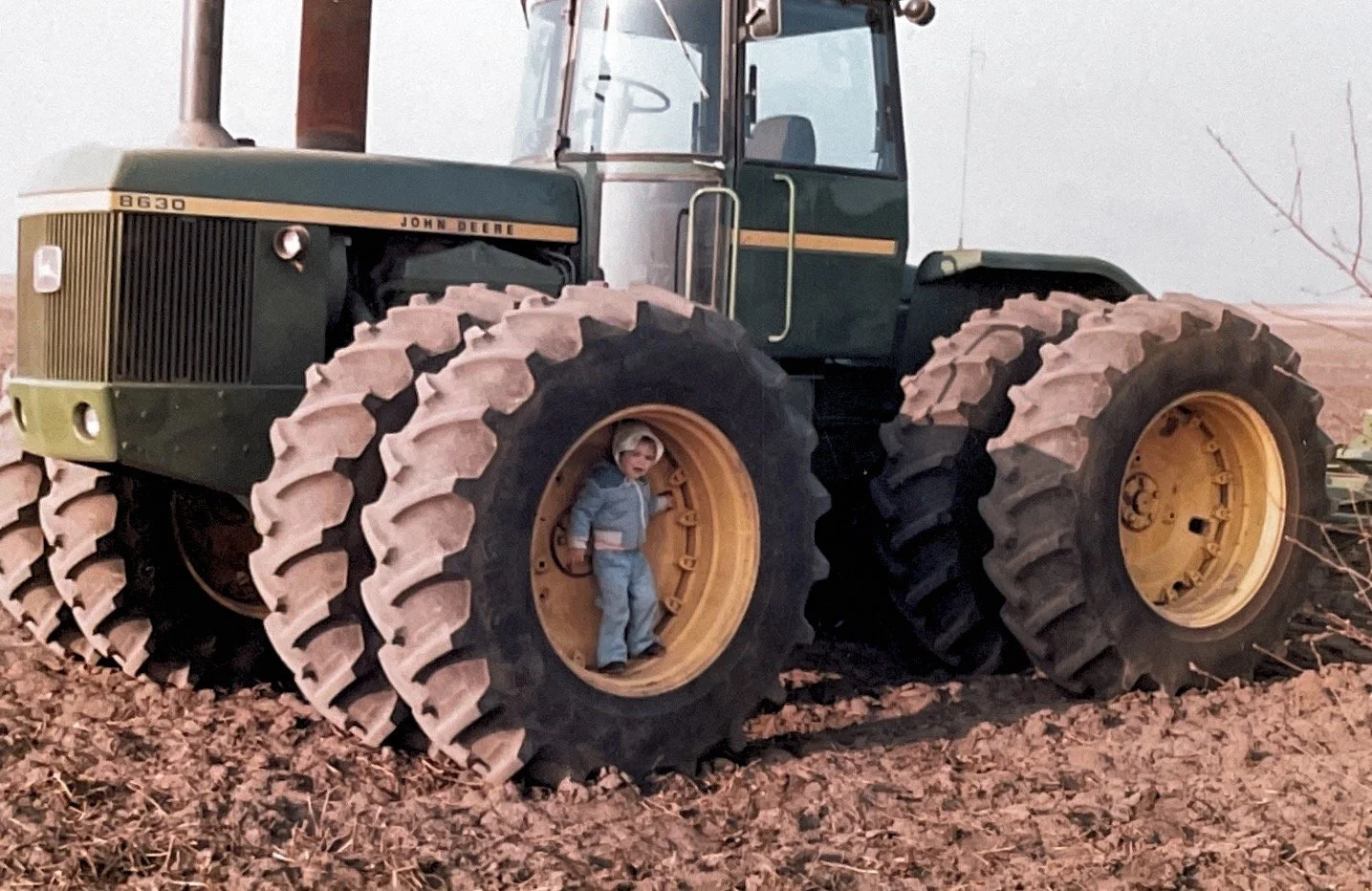
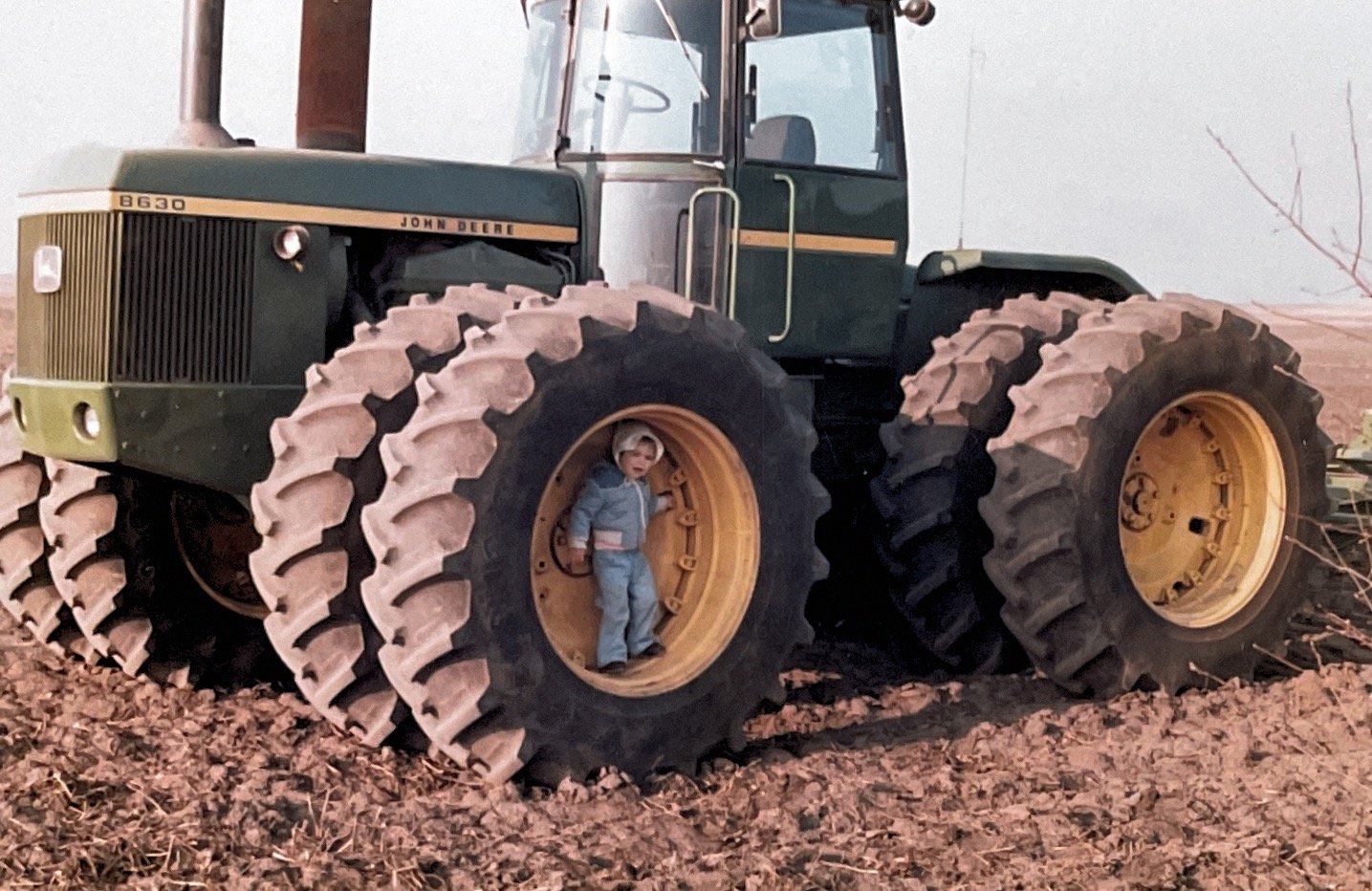
Jess Crane looking fashionable as a child standing in the rim of a tractor tire.
My own family-history research deepened that curiosity. As I traced my family tree and learned more about the place where I grew up, I became increasingly interested in how histories are preserved, who gets remembered, and what can disappear when no one takes the time to document it.
That perspective has shaped my work with the Will County Threshermen’s Association, a nonprofit organization dedicated to restoring and maintaining historical agricultural equipment. What began as help with its website grew into a broader collaboration around communication, community engagement, and sustainability. The association brings historic machinery into public programs throughout the year and hosts its four-day Antique Tractor & Steam Engine Show each July, inviting visitors to explore the grounds, see equipment demonstrations, experience tractor pulls, and learn from working steam engines and sawmills.
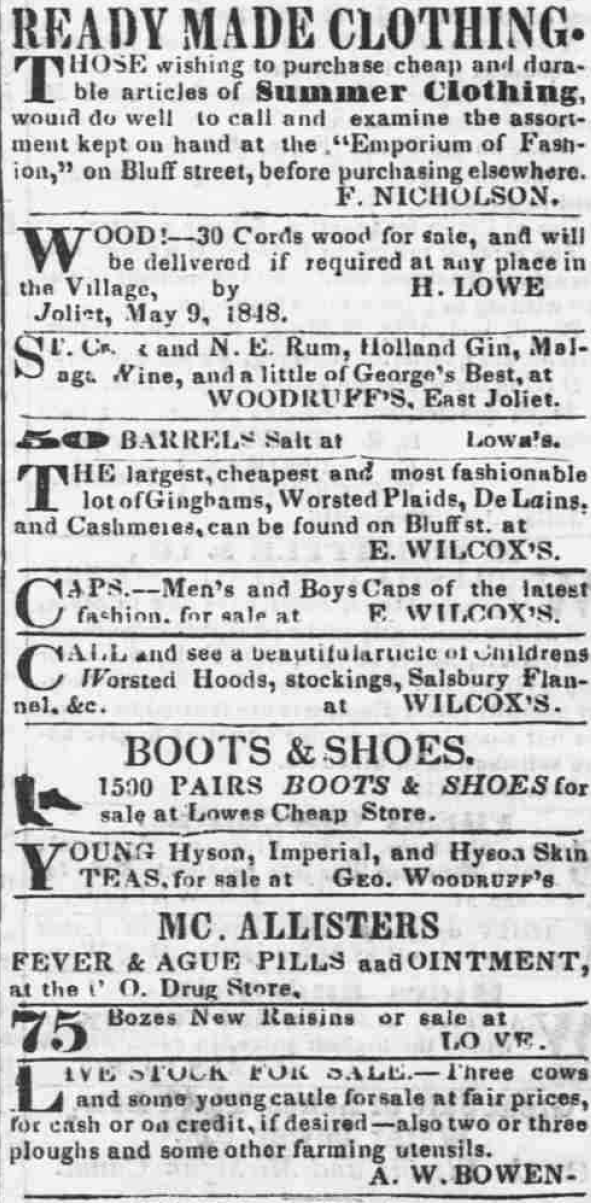
Joliet Signal, Volume 6, Number 10, 15 August 1848
While researching the association’s history, I looked through archived issues of the Farmers Weekly Review available through the University of Illinois Urbana-Champaign. I was searching for past articles and advertisements related to earlier Threshermen’s shows as they moved through Will County. Alongside that research, I found something unexpected: advertisements for apparel, sewing patterns, catalog ordering, and local clothing specialists.
Those small discoveries were a turning point. They reminded me that fashion history is not limited to major cities, famous designers, or formal institutions. It is also found in local newspapers, business advertisements, community events, family collections, organizations, and the everyday lives of people across Illinois.
Illinois Fashion History grew from that realization.
The initiative is dedicated to researching, documenting, and sharing the people, organizations, businesses, and industry that have shaped fashion in Illinois. Chicago is an essential part of that story, but it is not the whole story. Illinois Fashion History will explore histories from across the state, while recognizing that the research may sometimes extend into the Midwest and beyond.
My work with Apparel Industry Board, Inc. Chicago and Fashion Group International Chicago has also shown me the depth of the local fashion community’s history. AIBI began in 1987, and FGI Chicago dates to 1934. While serving on the committee for the 10th FGI Chicago Rising Star Awards—held after a ten-year hiatus—I began looking for past recipients, sponsors, organizers, and records of the program. That research has made clear how much there is still to uncover. I hope to pursue more of FGI Chicago’s history after completing my current two-year term as Regional Director.
In 2022, I worked with then–AIBI Executive Director Ambar Campos to create a coloring book featuring sketches by Chicago designers who had been involved with AIBI over the years. The project served as a fundraiser for the organization’s 35th anniversary. Today, I am working on a 40th Anniversary coffee-table book for AIBI and preparing historical displays for its Spring 2027 anniversary gala.
Illinois Fashion History is about looking back, but it is also about recognizing the history being made now. The people working to sustain, grow, teach, design, organize, and advocate for Illinois fashion today are part of that record, too.
I am excited to continue researching the past, preserving stories, and creating opportunities for the people shaping the local fashion industry now.